Thursday, June 23, 2011

Kiboga Hospital

Sorry for the lack of posting--I promise I'm alive! I've just been working really long hours at the hospital, cramming interviews in at all times of day, and desperately trying to finish the first assignment in the project I'm doing this summer. Plus I caught a cold so I'm a gross drippy ball of virus. :/

Here's a general post about the hospital I started on Sunday night (AGES ago!), and I promise more details soon!

**************************************************************

What’s more surprising at a large, busy hospital—two chickens strolling through the waiting room and coming up to the triage desk, or a gecko slipping into the operating theater and sneaking around the walls until he’s peering down at the just-delivered neonate?


The answer is neither here at Kiboga Hospital!


I find it hard not to stare and/or crack up at all the unexpected interruptions that happen daily at the hospital, but patients and staff alike never seem to bat an eye when crazy things happen in front of them. Chickens and cows roam the hospital grounds, people cook and do laundry outside the wards on the lawn, there's rarely electricity and never running water available...all a typical day at the hospital.


Kiboga is a Level 4 hospital, which means it’s a pretty big medical center, and only has two levels above it: the regional referral site in Hoima, and the national referral site in Kampala (Mulago Hospital, where I’ll be working shifts at the end of my trip). People come from several nearby districts (the Ugandan equivalent of states) to seek medical attention and to give birth where there are skilled birthing attendants (docs and midwives). There are four wards (male, female, pediatrics, and maternity), one operating theater, an outpatient department (that screens all patients, whether they’re outpatient cases, headed for inpatient wards, or are emergency case), a large HIV clinic, a couple big health education rooms (for antenatal classes, etc), and tons of administrative offices attached to the hospital and scattered around the hill the hospital is perched on.

The hospital from the road, and the side-trail we take up to it
Despite this impressive sounding status, the hospital looks nothing like anything you’d see in America. Beyond the madness outside the hospital walls, inside it's generally dark, dirty, and pretty smelly. The hospital is horribly understaffed and under-equipped, from lab equipment to medications to gloves to blood. The wards are crammed with people--each ward is supposed to have 24 beds or cribs, but most have around 30 beds, plus mats on the floor in every available space, bringing the total to 45 on the busier wards (like maternity).

Try to image doing rounds--the morning review of all of the patients on the ward with the sole doctor and the "sisters" (nurses). We're in our white coats, trying to look like legit doctors, helping to attend to patients, listening carefully to decipher the heavy L'Ugandan accents, and desperately attempting to answer the questions the doctor is "pimping" us with. Add to this skirting around a woman completely passed out on a mat who is 8 months pregnant and has severe malaria and anemia and is hooked up to a precarious IV stand, and making sure not to step too far back to avoid squishing the 2 day old infant sleeping under a blanket with his mother (who is recovering from an emergency c-section), to retake the blood pressure on a woman with preeclampsia who lost her previous pregnancy due to the same condition. Also I'm usually sweating, have a grumbling tummy, and my back and my feet are screaming from standing for hours on concrete floors every day.

Waiting room early in the morning, before it overflows...
Yep, it's rough. It's hard physically to keep up with our clinical mentor, the Ugandan Dr. K who never seems to eat or sleep, and thinks we're weird when we insist on going to get lunch at 4:30pm (after being at the hospital by 9) before returning to the hospital for back-to-back c-sections. It's hard to see the condition of the hospital, knowing what pristine, efficient, well-stocked, well-lit hospitals in America look like. But most of all it's hard to see the burden of disease and the great need of the people in the hospital. So many of the cases break my heart, because the diseases are largely preventable and the consequences of having them needn't be so disastrous to the patients and their families. And I feel largely useless, unable to understand their stories without translation, unable to get them the packed blood or medications they need to survive, unable to hurry the process along to see more patients each day so not only the very sickest get seen.

Don't get me wrong--I love it here. It's great to do what I can, and I'm learning so so much. Perhaps my biggest skill is clowning around with the kids in peds (who love to giggle at Dr. Mzungu's funny faces), but hey--being sick and scared sucks and laughter is (almost) the best medicine, right? And already Dr. K is having us do more, so hopefully I'll be actually helpful by the end of the summer. And hopefully my project (which I'll post about soon!) will help lots of people in the community, possibly for years to come!

Email me if you want some crazy/gory details of the cases we've been seeing, otherwise I'll try to post a PG-list soon!

Sunday, June 19, 2011

Adorable AIDS Orphans

On Tuesday morning Shalina and I were walking to the hospital when we heard “Good morning, white people!” coming from an SUV parked further down the street. We looked up since the accent was not L’Ugandan and the voice was friendly, and we met Brian, a construction consultant from Australia. We chatted with him and learned that he and his wife Jan were building an orphanage for AIDS orphans outside of Lwamata, the next town south from Kiboga. We exchanged phone numbers, and told him we’d be in town this weekend if he needed help with anything.

We talked to him on Thursday and he told us he and his wife were driving to a place 3hrs away to visit some orphans on Saturday, and invited us to come along. Shalina and I were feeling adventurous and trusting, so we said we’d love to go on an all day trip across Uganda with two strangers to meet some kids.

We met the Australians at 7:30am African time yesterday, which meant it was 8:15 when we hit the road. We quickly learned everything about their lives since Brian is a talker and a storyteller. The short version is that after Brian’s father died and he also received a terminal diagnosis, but then was completely healed, he decided he wanted to make big changes in his life. A series of events led him to Uganda, and to an orphanage named Mountains of Hope that was about to be forced to close due to lack of funding. Brian and Jan got involved and haved turned the situation around with their passion to help, their love for the kids, and Brian’s business savvy.

They have a 5-10yr plan to make the orphanage, which they’re moving from its current location in Mpigi (3hrs from here) to outside Lwamata (where it will be renamed Valley if Hope), and the school they’re building as well to be fully self -sufficient, and to introduce microfinance projects to the community on multiple fronts. It’s a well thought out and patient plan, and it reminds me a lot of the Ratzloffs’ work in Cambodia. Here's their website if you want to learn more or make a donation! http://wellspringcharities.org.au/home/

ANYWHOODLES, we drove to Mpigi yesterday morning, picking up a Ugandan named Sarah along the way. Sarah is the first “graduate” of the orphanage—she finished secondary school, spent a year being trained as a teacher, and is currently teaching at the primary school meeting at an old, scary-looking church building that will move to the new site next door with the orphanage once its built. She is cute and smart, and survived extremely rough times with her family before she lost them, and at the orphanage before the Australians came along. She was of course the most popular person once we reached the orphanage, since she was basically a mother to many of the kids.

There are currently 8 orphans staying at Mountains of Hope (and the two kids of the caretakers). (The number of kids fluctuates and was at 13 last year, but besides one sassy 4yr old who needs a lot of love and medical attention they are trying not to accept any more orphans til they make the move in September). They are so adorable, and clearly healthy, happy, well-fed, and well-dressed. They are very loved. It was awesome watching them interact with the Australians after not seeing them for a year. [you can see a lot of the courtyard of the orphanage here, with bedrooms and classrooms around the borders. you can also see Patrick, who hammed it up for every photo]


The kids were pretty shy with us at first, and just knelt around watching us while we met with James, the caretaker. He brought out blocks to distract them with after a bit, and I made friends quickly by joining them on the ground building towers and knocking them over. Knocking over block towers is fun in every language!

It wasn’t long before I’d stolen Blessing, the caretakers’ 8 month old baby to cuddle with, and was playing with a curious-but-suspicious two year old on the side. The older kids took longer to win over, but I just rough-housed and tickled the boys (and perfected my warrior pose and warrior grunt), and played swings with the girls (with some more tickles). Once we brought out the camera we had lots of fun taking pictures with them, and letting them try to take pictures of us (it was mostly just their fingers blocking the view of our chest or our legs…they were funny but didn’t get saved).

Shalina had been more reserved with the kids, chatting with the adults instead, until she pulled out her chapstick. For some reason the kids, who didn’t speak much English besides the usual greetings, knew “Lipstick! Lipstick!” Shalina donated her chapstick to the cause, and the kids had a riot putting lipstick on themselves and others. We think the boys enjoyed it the most.


We had a delicious meal cooked in the outdoor kitchen, and used the bathrooms which, while clean, were interesting…just a hole the size of the brick in the floor with doors that don’t close. We left around 3pm to start the drive back, and since we made it to Lwamata before it was completely dark we drove out to the construction site of the orphanage and the school (and dropped Sarah off there). It’s such a lovely, peaceful location. We know the kids will love it and thrive with a great school, good food, and medical care. The Australians treated us to a meal at their guest house in Lwamata (sooo delicious) before driving us home.


It was a wonderful day, and was such a treat to speak rapid English with people that understand you and to play with adorable kids all afternoon. We want to meet the sassy 4 yr old, Marissa, since she still has some unresolved medical issues that they’d like some advice on (she’s staying with the family of one of their Ugandan associates near the construction site), and hopefully we can direct her to appropriate doctors or medical facilities. They’ve received a lot of conflicting advice and aren’t sure what to do. We don’t know if we can help, but we’ll try! So hopefully we’ll see them the next weekend we aren’t out of town.

Friday, June 17, 2011

HIV Outreach in Kyankwanzi

Today the plan was to meet a TB specialist at 10, and then work in the maternity wards all morning, have a late lunch, a couple more meetings, and do some work. Why do we try to plan our days out still?

After waiting around for the person we were meeting he told us that we had two spots in a van going to Kyankwanzi to do HIV outreach and testing for the day, and asked if we were not too busy to come. We of course dropped everything and climbed in the back of the Range Rover with the rest of the team. Kyankwanzi (chamn-kwanzi) is the next district north of Kiboga and until recently was all part of Kiboga as well. It only took us 20 minutes to get to the site, but it was pretty isolated down many dirt roads.

The goal of these outreach visits is to provide rapid HIV testing to people who live far away from a clinic or hospital that does testing, and to refer HIV+ people to places where they can receive medical care and anti-retroviral therapy. Local village health workers/volunteers let people know the team is coming the morning of the visit, and so people trickle in to be tested for the several hours the team is there. The number of people tested varies from 10-200, depending on the size and isolation of the village (today we tested 75 people).

As soon as we mzungus stepped out of the Land Rover the children of the village stopped what they were doing to stare at us. No smiles or waving and first, just slack-jawed staring and following us at a safe distance, hiding behind trees or buildings and peeping out at us. Where we set up camp for the day was right next to the school, and somehow the word spread that two white girls had arrived in town and soon almost all of the 100 kids at the primary school were pressed up against the windows to try and catch a glimpse of us.

We caused such a disruption that the children were allowed to ditch class to come and see the mzungus. All the kids were fascinated by us. Staring and standing in clumps they'd occasionally return a wave, but were too shy to approach. Several kids would try and push or drag friends closer (but still a safe 30m away) who would then freak out and run away to hide.

Eventually the kids crept closer and closer, and while they'd still scatter if we showed too much interest or tried to approach them, they would wave and smile back at us. Eventually the HIV Outreach workers told us to take pictures of them (since we weren't much help with the project anyways) and this is how we became friends with the kids. They LOVED having their pictures taken, and seeing their faces on the screen after the shot was taken and laughed out loud to see mzungus in the photos with them.

The outreach staff would continually shoo the kids back, and they finally suggested that we go introduce ourselves to the teachers, who were hanging out in the shade across the school yard. We went and met them and they were very excited to talk to us as well, and after they corralled the kids back into their classrooms they brought us in to meet the 6th graders. It was very sweet and we got to help the kids practice their English, though they were still very shy up close. After that we had a few hours of peace (except for the dozen or so kids that weren't in school and kept following us around).

The kids escaped from school again later and we had them pose for more pictures, practice their English, and learn how to high five. We suspected that the kids had been wanting to touch our skin the entire time we'd been there, so once we demonstrated high fives we gave all 80-100 kids multiple high fives, which turned into shaking hands, and became a mob scene in general. It was adorable and extremely fun. Shalina and I both have sore cheeks from smiling and waving at the kids all day!

The team was great and we were able to informally interview them for our health project, and we learned a lot from them and the local community today. I'm sure we'll be going out with them again, and they said they'd take us to a REALLY remote place next time!

Thursday, June 16, 2011

Life in Kiboga so far

So after three days in Kiboga we're pretty settled in; we know our way around and are starting to get braver and so are using goat/cow paths as short cuts and are slightly exploring the town more, even though the language barrier makes it a bit hard.

(We decided to try a restaurant nearer the hospital today since we had to go back after lunch, and even though there was no one inside it looked very clean so we went in. They were EXTREMELY excited to have us, and the food was pretty good (best chapati in town!! and also cleanest bathrooms!!). However, once they discovered we were Americans they found an ancient tape of Celine Dion music videos to BLAST for us while we waited for and ate our meal. It was both awful and hilarious. Have you seen her videos? They're very much synopses of bad romance novels. And since this place was not the fastest, we were brainwashed by the end of the hour we spent there. We also might have PTSD because when were heard a neighbor blasting music this evening we both cringed and paled, fearing it was more Celine following us around town...)

Here's a view from the porch of the "best restaurant in town" which we eat at once or twice a day (yes, we're already tired of the very limited menu). There are big gorgeous green hills all around town, with banana and mango trees everywhere! The air is soooo much cleaner than Kampala, and so far it has rained a bit every day except today (and by rain I mean THUNDER-ELECTRICAL STORM-A-PALOOZA! they're pretty dramatic, but don't last more than an hour). The main highway through town is paved, but all the other roads are red dirt and extremely rutted.

There are farm animals all over everywhere. Most of them (except the chickens) seem to get tied up somewhere new every day, so we meet different animal friends on our walks to and from work (besides all the children who love to stare before eventually smiling and waving excitedly. We're also pretty concerned we'll cause an accident from people turning around on their motorcycles or turning and hanging out their car windows to stare and/or honk). There are tons of goats (and a family of cute triplet kids), a family of pigs that lives across the street from us, and lots of cows. Cows with MONDO horns! The horns are generally thicker and longer than my arms, so we keep away from the cows that aren't babies and lying directly in our pathway.


Here's a piglet we scared by sneaking up on it. Most of the buildings in town are brick, and there are piles of drying bricks everywhere. At least the red dirt that gets all over us and our stuff is useful!


While we have running water at the fancy guest house we're staying at (for $7 a day that includes a delicious breakfast-our favorite meal every day!) this is one of several water depots in town for the local residents. I'll try to snap a pic of the precarious ways people transport water to their homes...seeing a 10yr old on a giant bicycle with 6 gallons of water is both scary and impressive!


Our guest house is great--we're sharing a room and a bed, but as you can see it's pretty giant and has a super mosquito net.


The room has no furniture except for the small table (we had to ask for a second chair) but at least we have somewhere to work on our computers, and so all of our stuff is in piles on the floor around the room, and we're still mostly living out of our duffels.


The bathroom is funny, since it's just a suuuper tall shower head over the floor (and toilet), with a drain in the corner. But there's a hot water heater that gives you 2-4 minutes of hot water at a time, and it's nice to be able to shower standing up. The water goes out less often than the electricity, so we almost always have running water.


We've mostly just been having meetings to get introduced to all the VIP's at the hospital before we start on our projects, but since everything runs on Africa time it's been slow going. We got our first few interviews done with the HIV team today, which was wonderful--we don't feel like we've done nothing since getting here now.

We've also spent a couple hours each day shadowing in the wards. We've already seen some crazy stuff, and I'll do a hospital post soon to give you medically-interested peeps some more details.

Luckily the beginning of our stay here coincides with 7 Ugandan medical students' rotation here, so we've been getting to know them and they've been extremely helpful in getting us settled and introducing us to people in the hospital. We have a date to hang out with them Sunday night so I'm excited to chat with them more!

Off to bed for me--more meetings and hopefully time on the maternity ward tomorrow!

Tuesday, June 14, 2011

Kampala sightseeing

Safely in Kiboga! We're staying at a very nice place and had our first half-day at the hospital today, and already saw some crazy stuff. I'll take pics of the town here and write about the hospital soon.

Saturday in Kampala it stormed so we only got out of the house a few times during the day to run a errands (and episodes of getting drenched) and then went out to dinner at the most famous Chinese restaurant in town with the other Americans staying with us in Edge House.

On Sunday we decided to do a bit of sightseeing around Kampala before leaving the city for a week or two, so we explored a few sections of town, including Kasubi Tombs and Gaddafi Mosque.

Kasubi Tombs

Kasubi Tombs are where the kings of Buganda are buried. Uganda encompasses 5 historical kingdoms that are still in effect today, though our tour guide explained to us that Buganda is the best kingdom and has retained the most cultural heritage from its past. The first king used the compound as his palace for him and his many wives (each king seemed to take 60-80 wives over the course of their reigns), and was later buried there. The four past kings have been buried there (kings since the late 1800's) as well as wives and princes and princesses.


Here I am outside of the Chief Drummer's Hut. Only the Chief Drummer can sound the drums inside, and women weren't (and still aren't!) allowed into the hut--the CD must be celibate so the king doesn't have to worry about his wives being around him.

Why am I wearing that skirt? During the history lesson at the beginning of the tour our guide used me as an example that the king could just point to any woman and say "She shall be my wife." When we were ready to start the tour he said I couldn't go until I put on a traditional skirt, since wives of the king are not allowed to wear trousers. So I wore the skirt the whole tour :)


You know you're a med student when you see a hand made drum with multiple animal skins and you immediately think ANTHRAX!

The main palace of the first king, and the tomb of the kings buried at Kasubi, was burned down last March. It was extremely extremely upsetting to the Ugandans, especially since it was determined to be arson. Huge crowds gathered at Kasubi after the fire and the current King came out, and there were riots when the President showed up. People blamed the government for not protecting the site better, and when angry people threatened the President they were shot on site. Other people died from being in the crowd, due to dehydration or other exposure-related causes. The government has promised money to help rebuild, and since the site is a UNESCO World Heritage Site great care is being taken to renovate the entire compound. They're plans sound awesome and it will be a great place to visit next year!

Towards the end of the tour (after seeing wife and sister and children tombs and the oldest house in Uganda) we got to try out some traditional but non-special drums! Our tour guide showed us how, and then we all had fun trying them out. He was disappointed that we didn't want to dance to the drum beats, but he believed us when we said Americans can't dance! I'm pounding away on a python-topped, hollowed-out pine tree drum here.


Finally, our tour guide (and apparently the others who work there) are awesome artists! We all got art painted on bark, and this is my sweet zebra painting!


Gaddafi Mosque

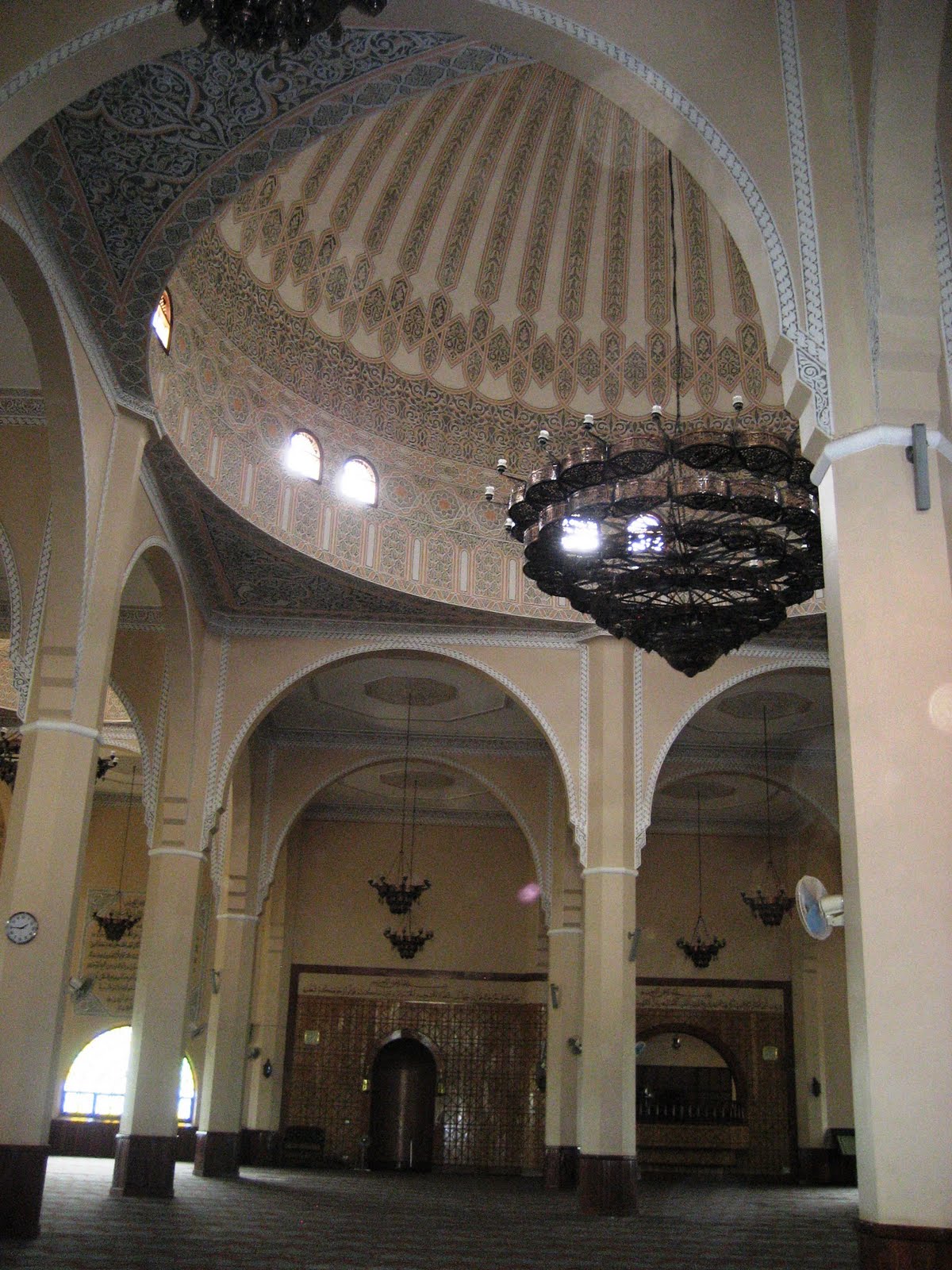
We can see this giant mosque from most places in the city, and it sits on a hill opposite from Mulago hospital so we've been curious to see it up close. Apparently it was begun by Idi Amin during his reign of power, and was later funded and finished by Muammar Gaddafi (we find this interesting/amusing)


Also amusing? Gaddafi Chapati! It's not only super fun to say, but these chapati were delicious and not too oily, and the stand is conveniently located at the bottom of the hill of Makerere campus. Mmmm Gaddafi Chapati


Shalina and I were inappropriately dressed to go onto the mosque grounds. We were wearing shorts which I suspected would be trouble, and we had to cover our heads and hair as well. So we had to rent two scarves each, which the guards put on us. It was awkward, and near impossible to walk around, and the top scarf would not stay on my head...but we looked hilarious! Two Arab men visiting the mosque as well asked if they could take pictures with us, so they obviously agreed we looked ridiculous.

The mosque was undeniably gorgeous inside


And outside there was a crazy huge arch and great views of the city. Our guide (the security guard--no one else there had a guide with them...) was very nice and loved taking photos of the three of us in front of every site to be seen at the mosque. They were often crooked or cut off someone's head, but this one seemed arty in its crookedness.

The day was fun and we had weird snacks and meals all around the city, and went out for some good mzungu food for our last dinner in Kampala for awhile (mah-zoon-goo, the L'ugandan word for white people, which we hear all day every day, especially from kids, and especially now that we're in the village).

I'll post about Kiboga soon!